

Pocket Coruña
Discover A Coruña, find things to do and get around the city with a single app. Explore places and routes, check events, bus times, BiciCoruña, taxis and the weather forecast — an experience designed for visitors and locals alike.
Sometimes you have a photo you love, but something stops you from using it the way you’d like. The background is distracting, the format doesn’t suit where you want to post it, or the resolution falls short of what you have in mind. At other times the image is fine as it is and you simply want to play with it: change its style, or picture it with completely different elements.
Until recently, nearly all of that meant specialist software, time spent learning how to use it and patience for fiddly manual adjustments. Even seemingly simple changes, like removing an object or widening the frame of a photo, could easily eat up an afternoon.
Editasteic brings AI image editing tools together on a single platform, so those changes are within anyone’s reach. From your browser, you can enhance an image, remove its background, change specific parts, expand the scene or explore new visual styles — always starting from your own photos and without having to master a professional editor. You focus on what you want to achieve; the tool takes care of how to get there.
Discover what you can do with Editasteic
Enhance, edit and transform your images right in your browser.
Not every image needs a complete makeover. Often all it takes is fixing one detail to turn a photo from “almost” into “exactly what I need” — and the background tends to be the first of those details. Think of a product shot for your online shop with a cluttered desk behind it, or a portrait you’d like to use in another composition without dragging the original setting along.
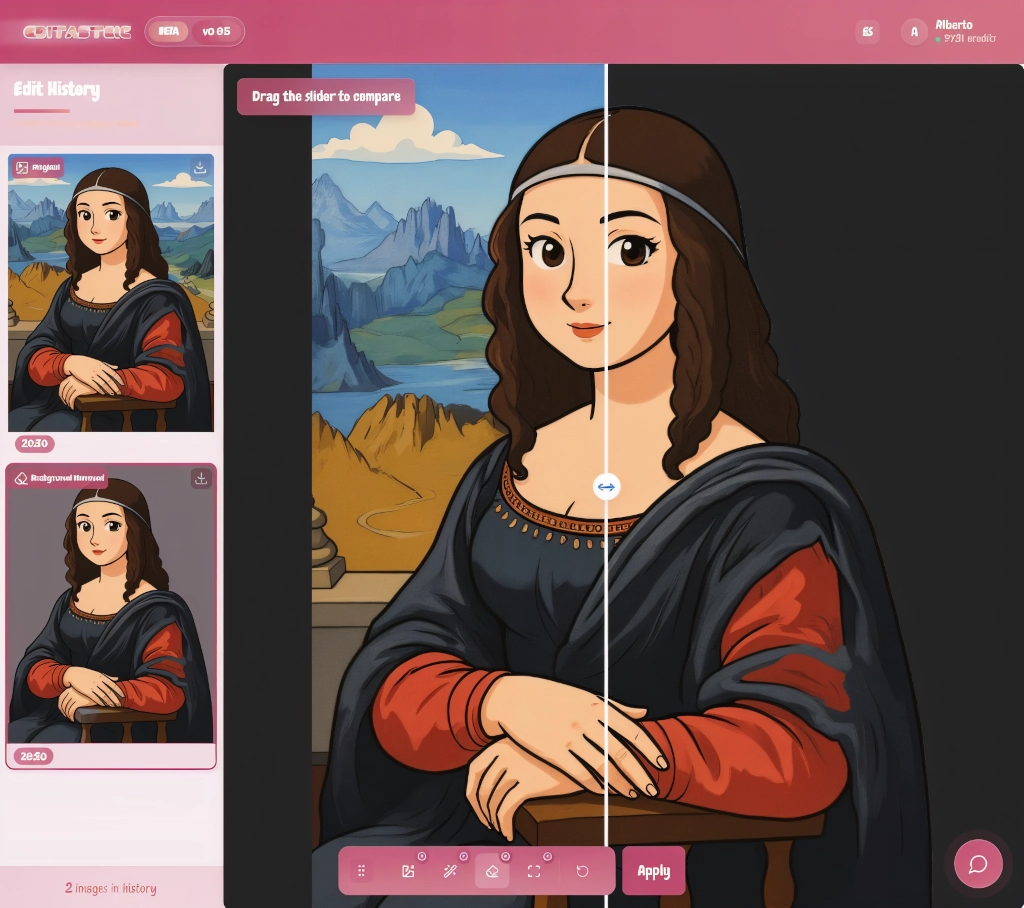
Editasteic’s background removal detects the main subject and separates it from everything else, with no manual cutting out. The result can keep a transparent background, ready to drop into any design, or go straight onto a white, green or blurred one. It’s a small step, but from there the same image works for product listings, profile pictures, thumbnails or promotional material it had no place in before.
Once the composition is clean, the next hurdle is usually size. The photo that looked great on your phone is too small for a presentation, a large-format post or a print — and enlarging it the traditional way only leaves you with blurry edges and a pixelated look.
Editasteic’s AI image upscaler doesn’t just stretch the existing pixels: it analyses the image and rebuilds textures and detail to produce a version up to four times its original size. The result depends on the quality of the file you start with, but in many cases it turns an image you’d written off into something you can actually use.


With the image now sharp and the right size, there may still be something inside it to fix: an object in the way, an element you’d rather swap, or an empty spot where something new would fit. None of that requires redoing the whole photo.
In Editasteic you can mark the exact area you want to change, with a brush or shapes, and describe what should appear there. The rest of the image stays untouched, and the change blends in with the lighting, colours and perspective around it. If you’d rather not draw anything, smart editing lets you put it into words instead: add an element, remove another or replace one object with a different one, much as you’d ask someone who knows their way around an editor. It’s a far more natural way to work, describing the result rather than the steps to get there.
As with any generative tool, results can vary with the complexity of the request and the image itself, so it’s often worth trying a couple of different phrasings until you find the one that works best.


So far, every change has happened inside the frame. But sometimes what’s missing is just outside it: a portrait-orientation photo you need in another format, a subject squeezed against the edges, or an image without enough breathing room for a headline. Cropping won’t help — it only takes away, and often loses something important along the way.
Canvas expansion does the opposite: it pulls the camera back. Editasteic extends the scene 1.5 or 2 times beyond its edges, or turns it into a square image, generating the new content by continuing the sky, ground, textures and lighting of the original. A landscape gains horizon, a portrait gains space around it, and a tightly framed shot becomes a far more flexible starting point for headers, banners or social media posts.
Enhancing, fixing and expanding are all ways of getting more from an image without changing what it is. The next step is turning it into something different while keeping it recognisable.
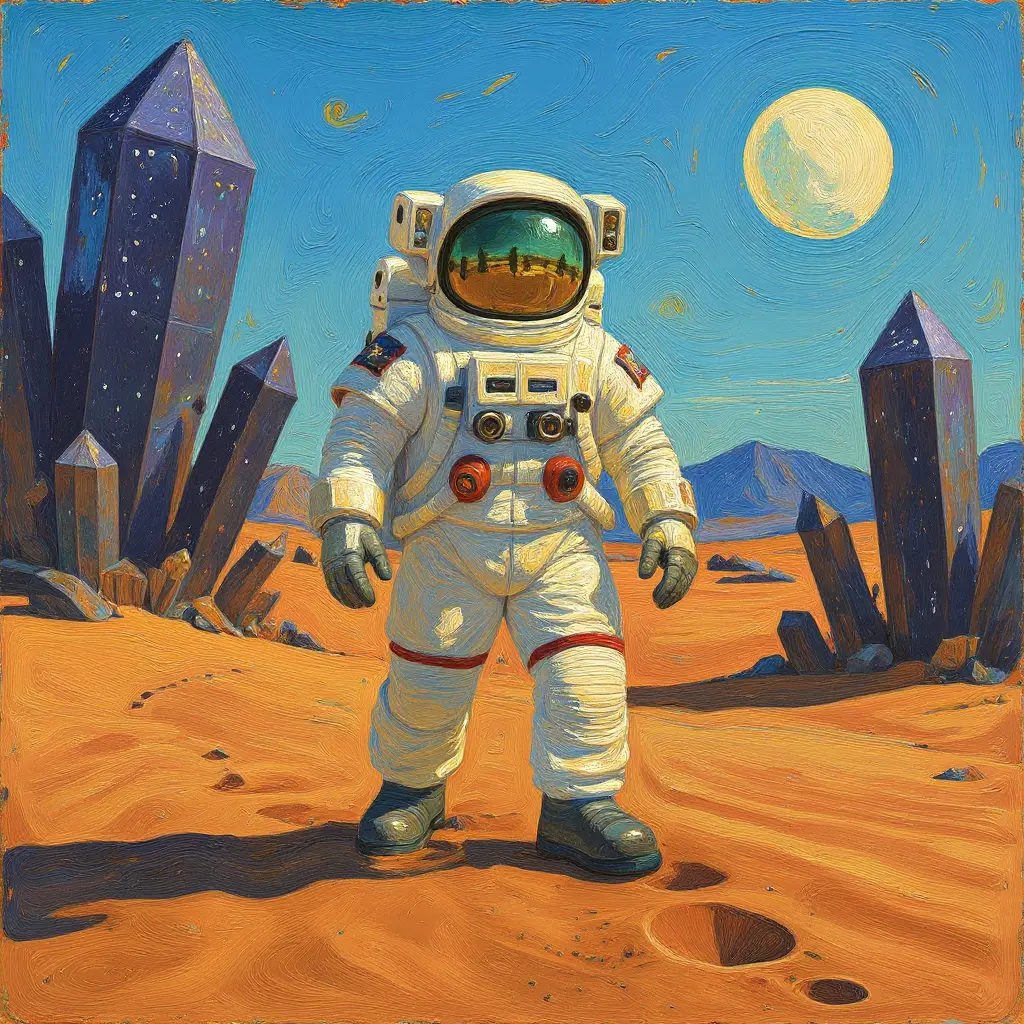
Restyling reinterprets the whole photo while preserving its composition. This isn’t a colour filter: the scene is regenerated in the look you choose, whether that’s a painterly canvas, an oil painting, a cinematic film still, a comic book panel, pop art, a paper sketch, a 3D render, a studio product shot or classic black and white, among other options. And if none of them matches what you have in mind, you can describe the style in your own words. A single photo can lead to very different versions, which is just as useful for exploring the visual direction of a project as it is for having fun with your personal photos.

Some images matter as much for what they say as for what they show: a poster, a promotional piece, an infographic or a post with built-in text. When that material needs to reach an audience who speaks another language, recreating it from scratch is usually the most time-consuming part.
Editasteic includes a dedicated tool for translating the text in an image. Choose the target language — Spanish, English, French, German, Portuguese or Italian — and you get a new version with the translation built into the design. Because the image is regenerated, it’s worth checking the result before publishing, especially with handwriting or highly stylised fonts, to make sure the message, spelling and layout are what you expect.
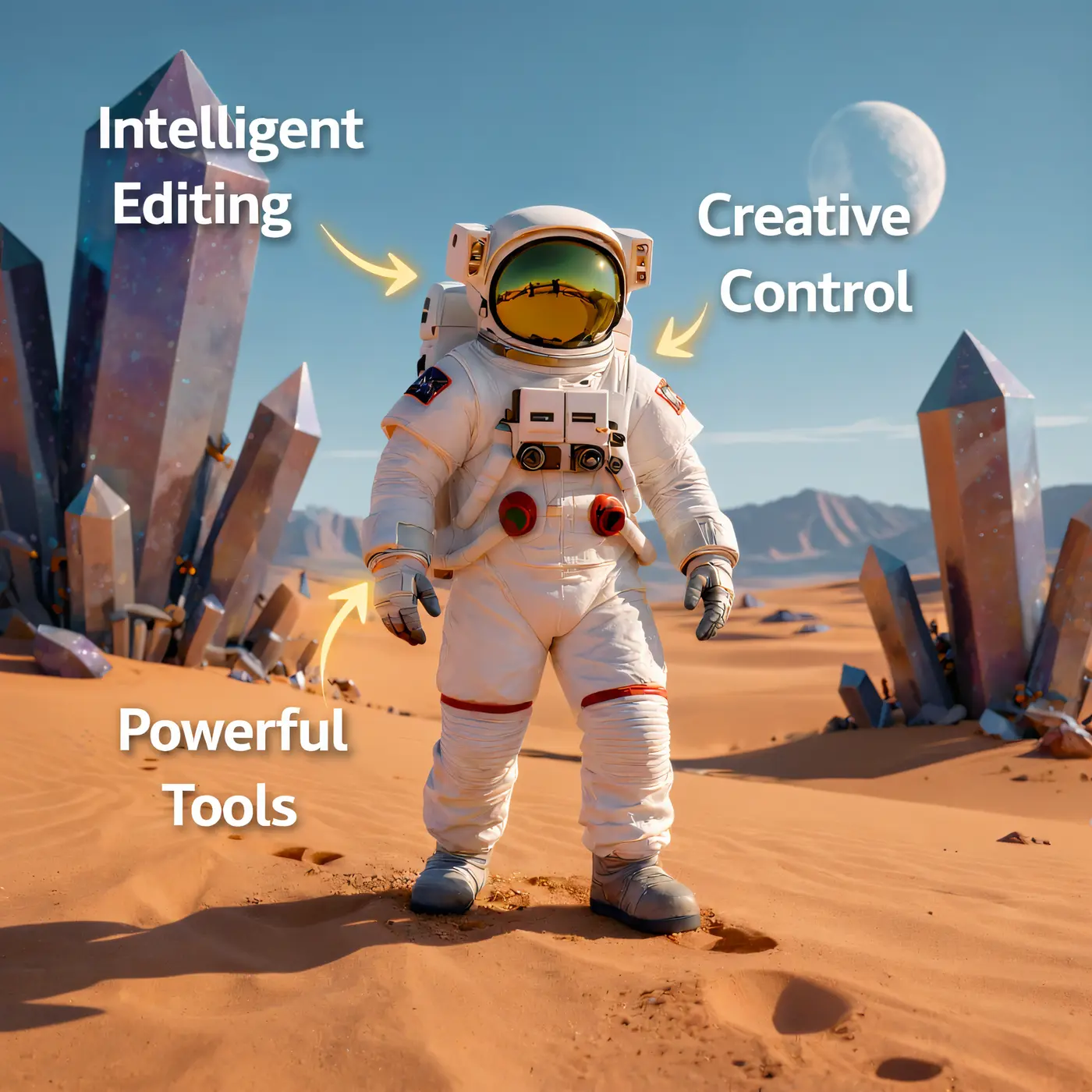
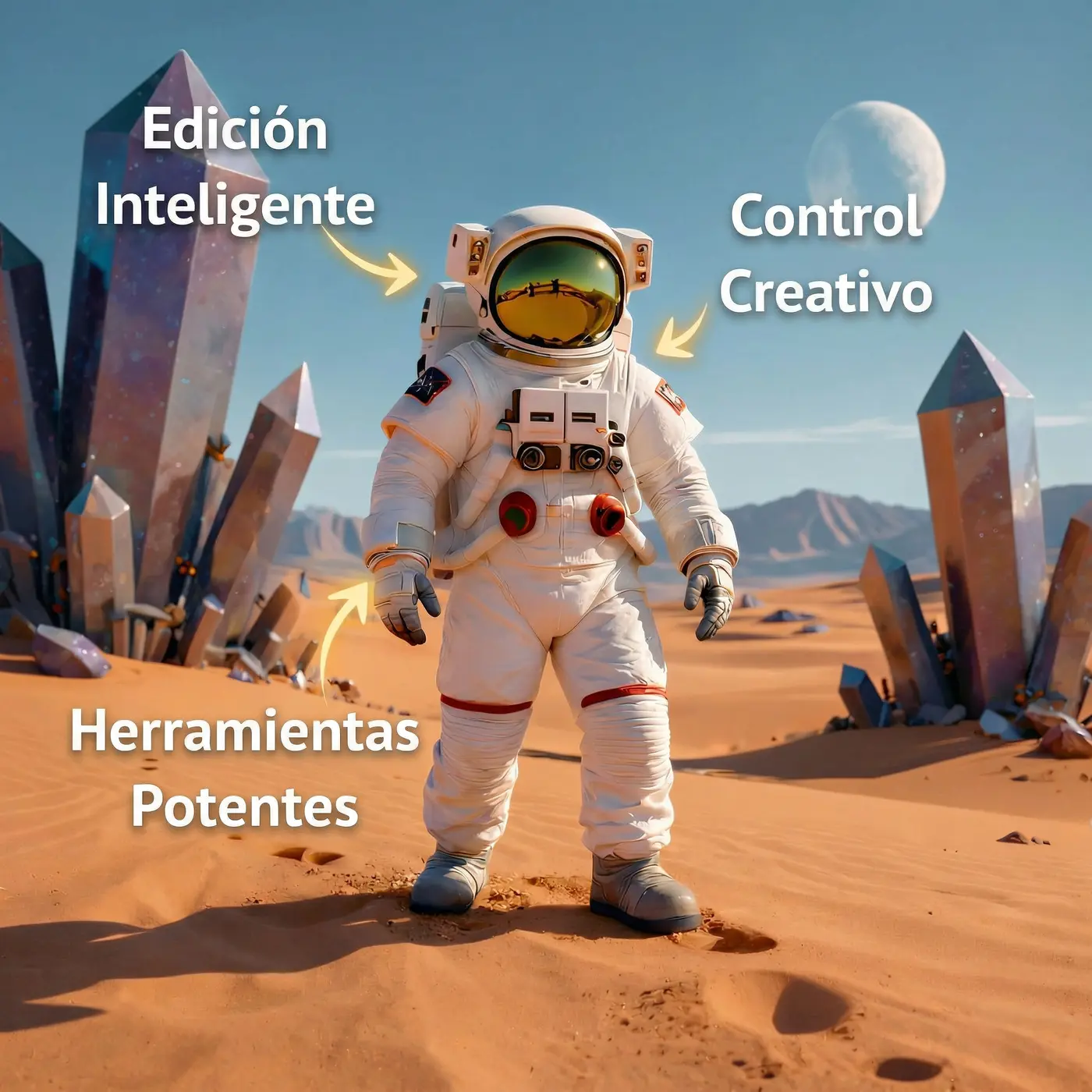
Each tool solves a specific need, but things get really interesting when you combine them. A photo might first need upscaling, then a different background and finally a wider canvas to become the header of a website. Another might start from a completely different idea: open up its setting, add something new and see how it would look as a painting.
That’s why Editasteic fits so many different situations. Content creators can adapt the same image to several formats and styles. A small business can improve its product photos and prepare campaign material in other languages without relying on a designer for every change. In a creative project, it’s a way to explore alternatives before committing to a direction. And anyone who simply enjoys photography will find a space to experiment and reach results they hadn’t imagined when they started. You don’t always need to know the end result in advance — sometimes trying a transformation is exactly what shows you the right way forward.
Having so many possibilities shouldn’t mean wrestling with a complicated tool. You sign in, upload an image from your device and choose what you want to do with it. Depending on the tool, you adjust a few options, mark an area or describe the change in writing, and within seconds you have the result.
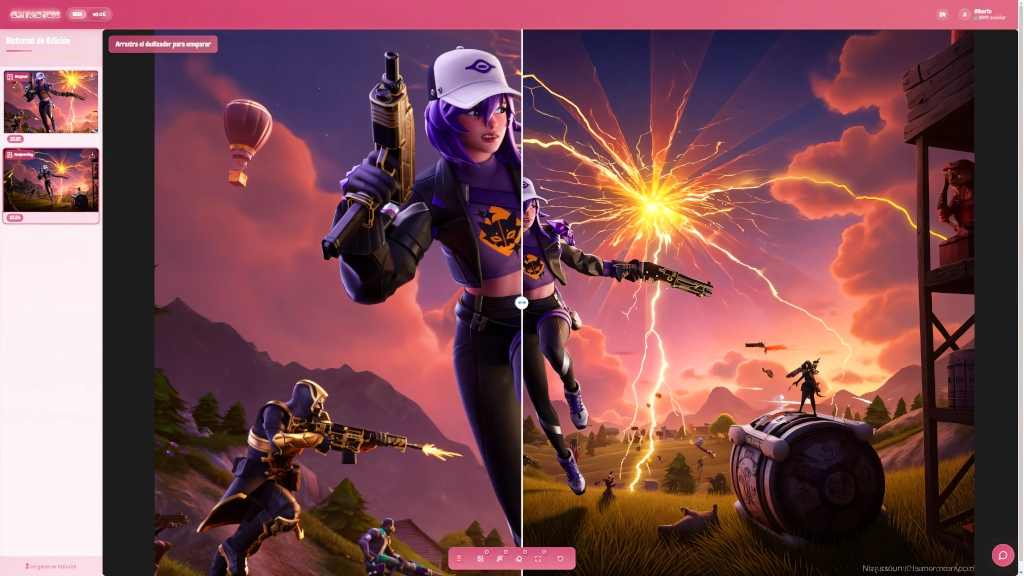
Every version is saved in the image’s history, so you can compare it with the previous one by dragging a slider, go back a step if an experiment doesn’t convince you, or download any of the versions along the way. That safety net is what makes it easy to experiment freely: the original is never lost.
The tools run on a credit system. Each operation has a cost that depends on the type of transformation, and you see it before you apply it, so you always know what you’re spending. When you create your account you get some welcome credits to start trying things out, and when you need more you can buy them on the platform itself, with no subscription or commitment. It works just as well if you only edit images now and then as if your needs change from one project to the next.
A photo doesn’t have to stay limited to its original framing, its resolution or whatever happened to be in it when it was taken. Sometimes it just needs a small touch-up; at other times, a complete change of look, a wider scene or a message in another language. Editasteic puts all of those possibilities within reach, always starting from your own images.
Start transforming your images with Editasteic
Explore its tools and discover new creative possibilities.
Concept to value
Discover A Coruña, find things to do and get around the city with a single app. Explore places and routes, check events, bus times, BiciCoruña, taxis and the weather forecast — an experience designed for visitors and locals alike.

Scan the slip of a bet you have already played and reuse your numbers: change the dates, play more draws or move them to another game. No account needed. Spanish lotteries only.

Share files between phones, computers and tablets quickly, easily and privately. No apps to install, no cables and no account required. Connect your devices and transfer files directly from your browser with end-to-end encryption.

Convert Word, Excel, PowerPoint, PDF and other documents to Markdown in your browser. Extract their content, reuse it with ease and keep your files private thanks to local processing, with no uploads to any server.